When an aging parent says, “I want to stay in my home,” the first response from the family is often concern.
Is the house safe? Who will handle repairs? What happens if something breaks? Are they still able to manage the stairs, the bathroom, the yard, and all the other responsibilities that come with owning a home?
Those are fair questions. But it is also important to understand what the home represents to your parent.
It may be the place where they raised their children, celebrated holidays, built friendships, and spent decades creating a life. Wanting to remain there is not necessarily stubbornness. It is often about independence, familiarity, and dignity.
The best place to begin is not by taking control. It is by starting a respectful conversation.
Ask What Has Become Difficult
Instead of beginning with a list of everything you believe is wrong, ask your parent what has become more difficult.
Are there household tasks they have started avoiding? Does getting into the shower feel less secure? Are they having trouble changing air filters, reaching light fixtures, or carrying things up and down steps?
People are often more comfortable discussing a specific task than admitting that they need help in general.
Listen for phrases such as:
- “I just haven’t gotten around to it.”
- “I don’t use that bathroom anymore.”
- “I’ll take care of it eventually.”
- “It only leaks a little.”
Those comments may point to maintenance or safety issues that need attention.
Look at the Home With Fresh Eyes
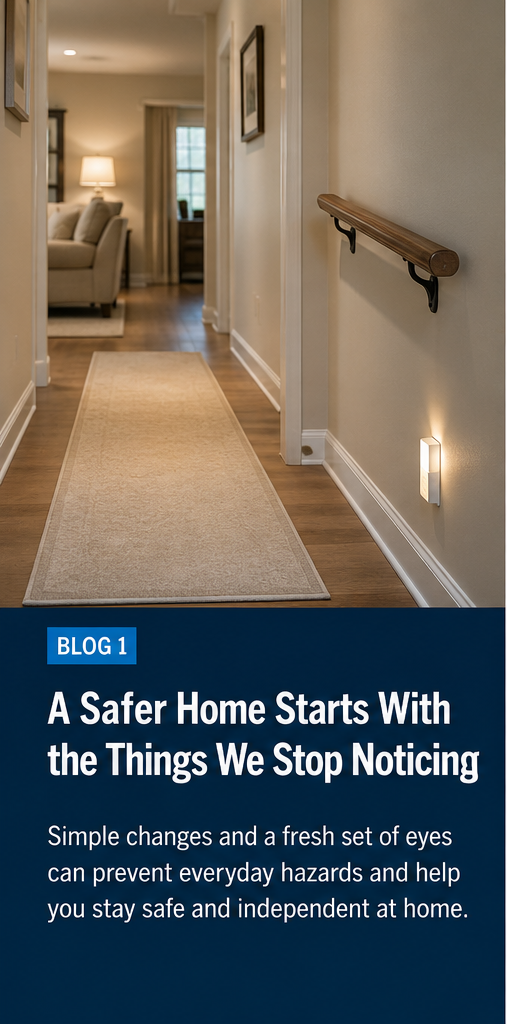
Families become familiar with a home, too. We may stop noticing the loose rug, dim hallway, narrow walkway, or unsteady railing because it has been there for years.
Walk through the home as though you were visiting it for the first time.
Look at entrances, steps, bathrooms, bedrooms, hallways, lighting, flooring, and the everyday path from the bedroom to the kitchen or bathroom.
Do not focus only on major renovations. Many homes can be made safer through practical, reasonably sized improvements.
Separate Immediate Concerns From Future Planning
Not everything has to be handled at once.
Start by separating concerns into three groups:
Needs attention now: Loose railings, unsafe steps, tripping hazards, active leaks, poor lighting, and anything else presenting an immediate concern.
Should be addressed soon: Routine repairs, bathroom improvements, door hardware, flooring transitions, and maintenance that is becoming difficult to manage.
Plan for the future: Possible entry modifications, additional support in the bathroom, changes to a frequently used room, or a longer-term maintenance arrangement.
This keeps the discussion from becoming overwhelming and gives the family a practical order in which to proceed.
Build a Reliable Support System
One of the greatest challenges for families is not identifying what needs to be done. It is finding someone trustworthy to do it.
Adult children may live in another city or have work and family responsibilities of their own. The older homeowner may be uncomfortable hiring a stranger or may have had a poor experience with a contractor in the past.
Having a reliable person who communicates clearly, arrives when expected, and understands the needs of an older homeowner can remove a great deal of stress.
The goal should be to establish support before a problem becomes an emergency.
Keep Your Parent Involved
Aging in place should not mean that decisions are made around the older adult rather than with them.
Explain what you have noticed. Offer options. Ask what matters most to them. Whenever possible, let them decide which improvements should be made and when.
There may come a time when more direct intervention is needed, but most conversations go better when they begin with respect rather than fear.
Progress Is More Important Than Perfection
You do not need to solve every possible future problem in one weekend.
Begin with the most important safety concerns. Take care of the repairs that have been put off. Create a dependable plan for ongoing maintenance. Revisit the home as needs change.
Helping a parent remain at home is rarely about one major project. It is usually a series of thoughtful decisions made over time.
At AIP Home Pros, we believe the right improvements and dependable support can help older adults remain in the homes they love while giving their families greater peace of mind.
The conversation does not have to begin with, “You cannot stay here.”
It can begin with, “What would make staying here safer and easier?”