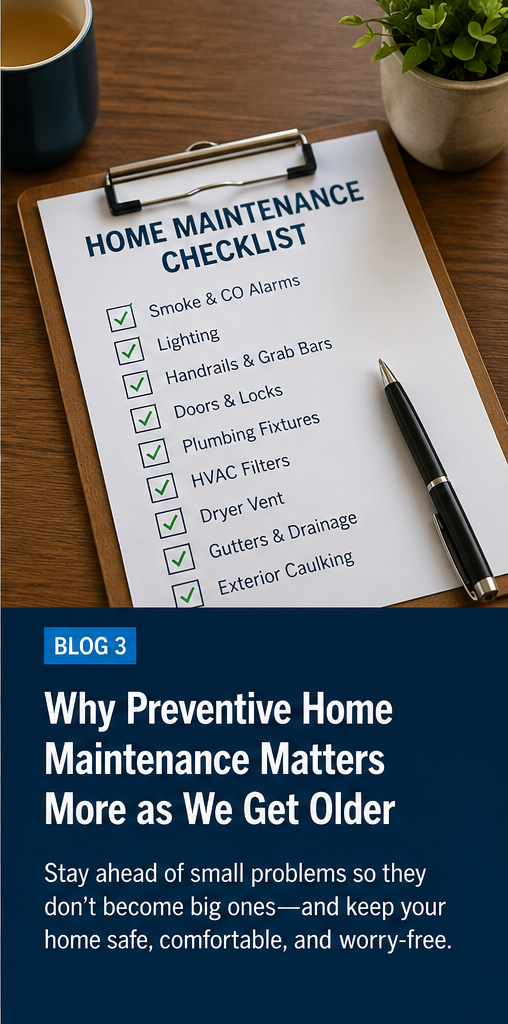
Most of us know our homes so well that we move through them without giving much thought to what is around us. We know which step creaks, which rug slides a little, and which light takes a second or two to come on.
Start With the Way You Enter the Home
The problem is that familiarity can make it easy to overlook things that have gradually become unsafe.
A loose handrail may not seem urgent because it has been loose for months. A dark hallway may not feel dangerous because we know where everything is. A small stack of boxes near the doorway may seem harmless because we have walked around it a hundred times.
Then something changes. Our balance is not quite what it used to be. We get up during the night while still half asleep. We are carrying groceries, watching a grandchild, or simply not paying attention for a moment.
That is often when a small issue becomes a serious one.
The front entrance is one of the first places I recommend looking.
Are the steps level and easy to see? Is there a secure handrail? Does the porch light provide enough visibility after dark? Is the walkway free of cracks, roots, or uneven sections?
These are ordinary parts of a home, but they are used every day. Improving an entrance does not always require a major renovation. Sometimes a brighter light, a repaired step, or a properly secured handrail can make a meaningful difference.
Take an Honest Look at the Bathroom
Bathrooms deserve special attention because water, smooth surfaces, and limited space can create a difficult combination.
Look at where someone naturally reaches when getting into or out of the shower. A towel bar is not designed to support a person’s weight, even though many people instinctively grab one when they lose their balance.
Properly installed grab bars, a secure bathing surface, adequate lighting, and a clear path to the bathroom can make everyday routines safer without making the room feel institutional.
The goal is not to make a home look like a hospital. The goal is to make it easier and safer to use.
Walk Through the Home at Night
A home can feel completely different after dark.
Try walking from the bedroom to the bathroom with only the lighting normally used at night. Are there dark areas? Are light switches easy to reach? Does furniture narrow the walking path? Are cords, rugs, or other items difficult to see?
Simple lighting improvements can help, particularly around stairs, hallways, entrances, and bathrooms.
Check What You Use for Support
People often steady themselves using whatever happens to be nearby—a countertop, furniture, a doorframe, or a towel rack.
Pay attention to those moments. They may be telling you where additional support is needed.
Handrails should be firmly secured. Grab bars need to be installed into appropriate structural support. Furniture used for balance should not slide or tip.
If someone frequently reaches for the wall or nearby objects, it is worth asking why.
Do Not Ignore the Small Repairs
A dripping faucet, loose floor transition, sticking door, burned-out bulb, or wobbly step may not seem like an emergency. Still, these are exactly the kinds of items that tend to remain on a household list for months.
For an older homeowner, addressing those small problems can improve both safety and peace of mind.
A home does not usually become unsafe all at once. It happens gradually as maintenance items accumulate and our needs change.
The good news is that improving safety can happen the same way—one practical improvement at a time.
At AIP Home Pros, our goal is not to tell someone that they can no longer manage their home. It is to help make the home easier to manage so they can remain safe, comfortable, and independent for as long as possible.
A safer home often begins with taking a fresh look at the things we have stopped noticing.